
Multi Lane Free Flow (MLFF) Tolling Solution: Gantry Hardware, Software and e-Notice
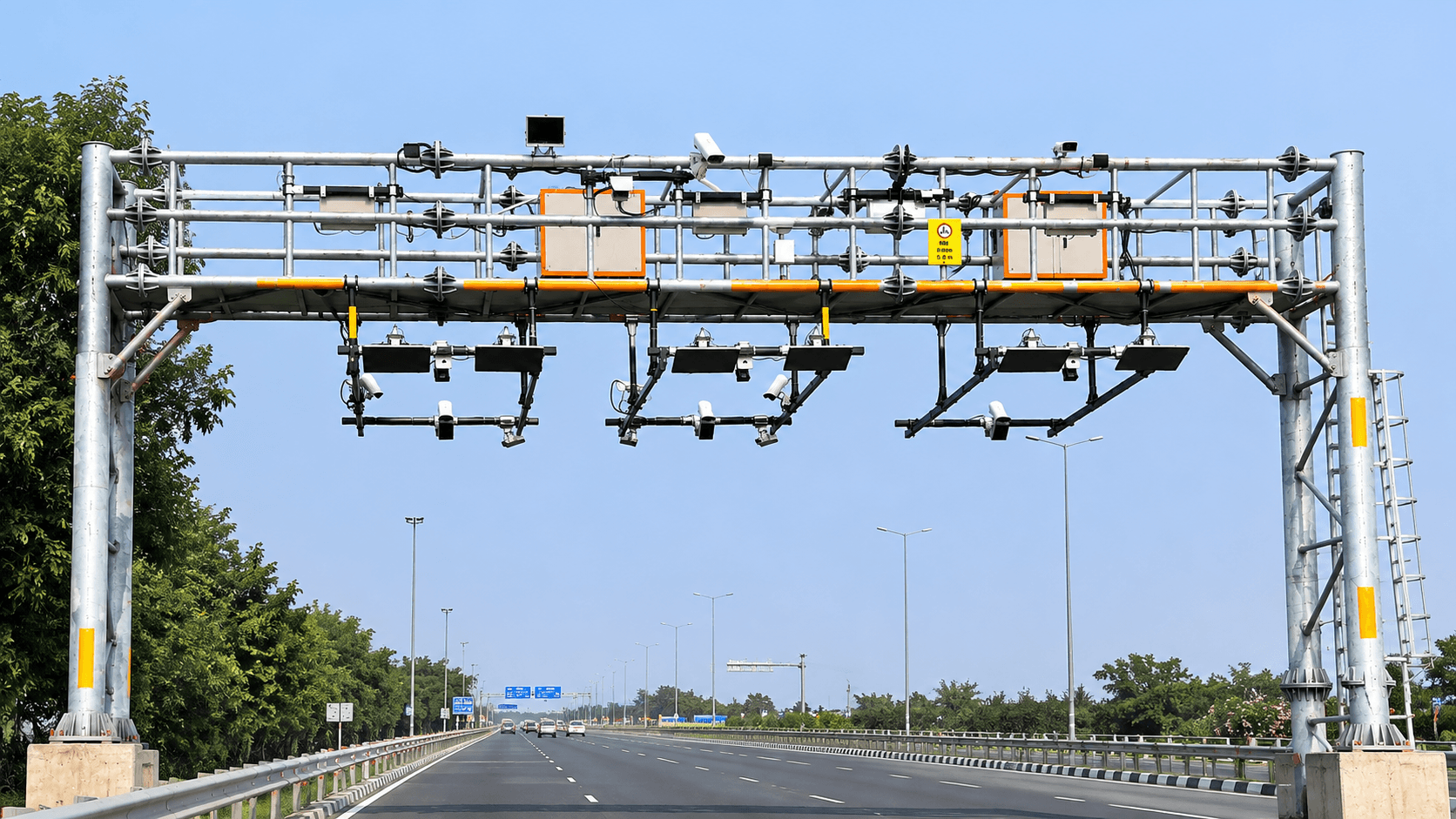
Vehicles keep moving at highway speed. The gantry reads, classifies, charges and records every one of them.
Multi Lane Free Flow (MLFF) tolling takes the barrier out of the toll plaza. Vehicles cross a gantry at normal highway speed, the system identifies each one, and the toll is deducted from its FASTag. No stopping, no queue, no boom barrier.
Network Toll Solution supplies the whole roadside system: the gantry hardware, the plaza servers with load balancing and backup, the software, and the integration with your acquirer bank, NPCI NETC and the national e-Notice system. The equipment lists below follow the minimum bill of quantity used in national MLFF tenders, so you can see exactly which hardware does what.
How a Vehicle Is Tolled Without Stopping
From the moment a vehicle reaches the gantry, the journey runs without anyone touching a thing.
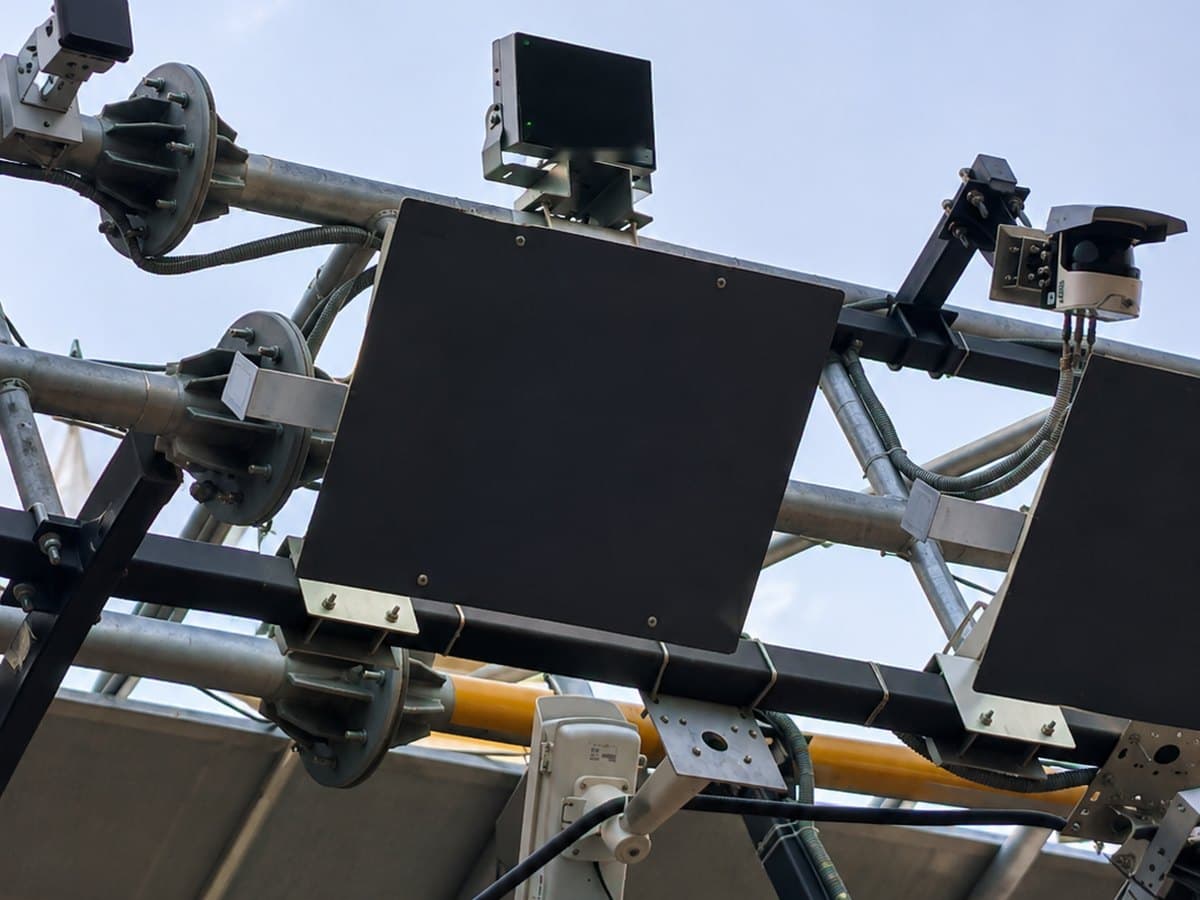
- Sense: radar and LiDAR detect the vehicle, measure its speed and tell the other devices when it is under the gantry.
- Read: the RFID reader picks up the FASTag while ANPR cameras facing the front and the back capture the number plate, day or night.
- Identify: the plaza software fetches the tag and vehicle details from NPCI's NETC mapper using the tag ID, the TID or the number plate, and works out the toll from the vehicle class.
- Charge: after a balance check with the issuer bank, the payment request travels through the acquirer bank and NETC, and the toll is deducted from the FASTag.
- Record: images, video and the transaction are stored together, so every charge and every notice has evidence behind it.
How the Data Travels: From the Gantry to the Bank
Every vehicle sets off a short chain of events. This is the path the data takes, from the sensors on the gantry to your bank and back.
- 1. On the gantry
- RFID reader and antennaReads the FASTag
- ANPR camerasRead the number plate, front and back
- Radar and LiDARDetect, time and classify the vehicle
Edge and Layer 3 switches carry the data over armoured fibre to the plaza - 2. At the plaza
- Load balancerShares the lane traffic across the servers
- MLFF servers in HA modeMatch the vehicle, set its class and work out the toll
- StorageImages, video and every transaction
- Backup serverKeeps a protected second copy of the records
- Control roomWorkstations and video wall for live monitoring
Firewall and redundant 1 Gbps links send a digitally signed payment request - 3. Banks and NPCI
- Acquirer bankReceives the signed payment request
- NPCI NETCMaps the tag and routes the request
- Issuer bankChecks the balance and debits the FASTag
The result travels back the same way - 4. Back at the plaza
- Result recordedStored with the images and video for reports and disputes
- e-Notice if unpaidRaised automatically when the toll can't be collected
The Hardware on Every Gantry
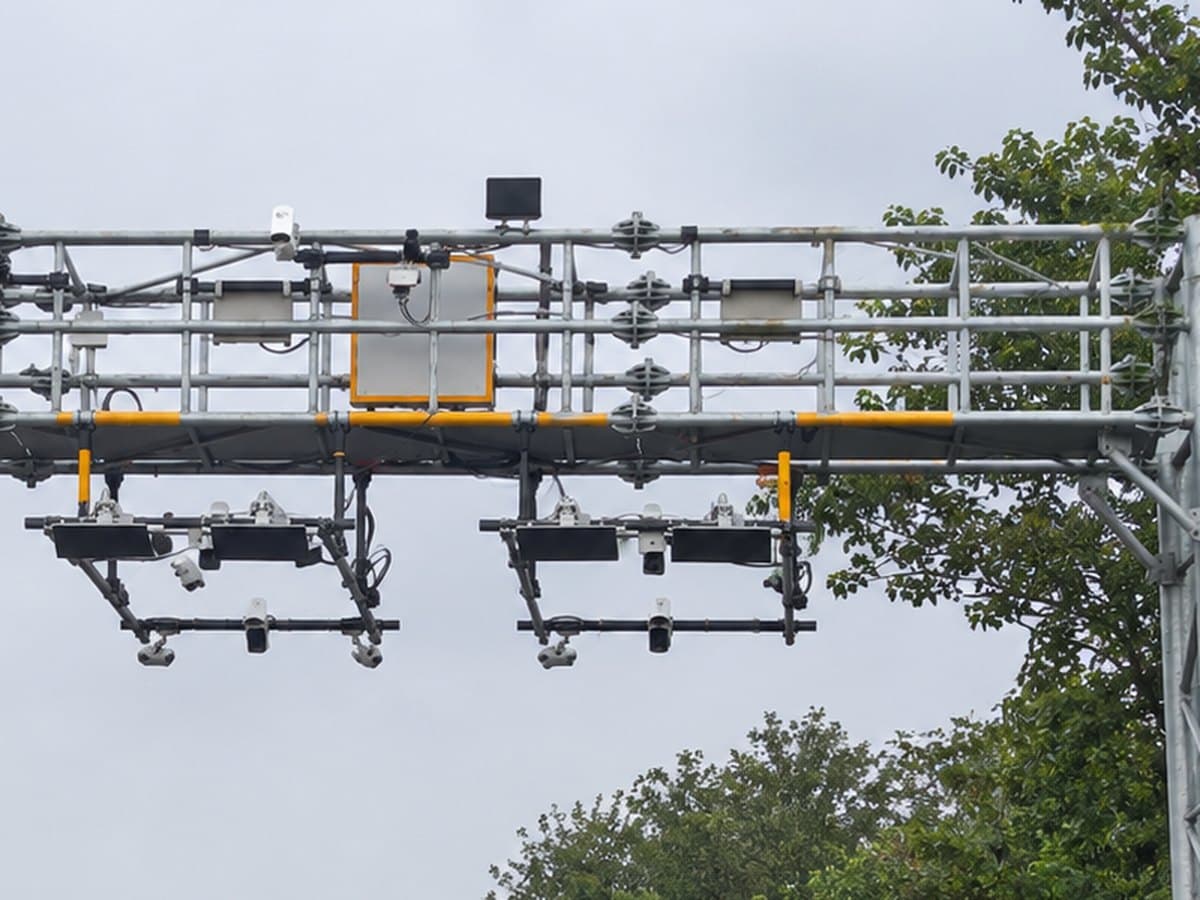
Each lane gets its own set of devices, so one lane never depends on another. RFID and ANPR work as a pair on purpose: the tag gives a quick, certain read, and the camera catches vehicles with no tag or one the reader cannot read.
| Equipment | What it does |
|---|---|
| RFID antenna | UHF 865-868 MHz, 10 dBi gain, IP65. Sends and receives the signal that wakes the FASTag. |
| RFID reader | 4-port UHF reader that works at 100 km/h or more, with up to 33 dBm output and a 10,00,000-transaction memory. |
| Radar detector | Tracks up to 256 objects at once, up to 200 m away. One sensor can cover up to 4 lanes and measures speed within 1%. |
| LiDAR detector | Overhead infrared scanner for vehicle detection and classification. Detects 10 to 220 km/h, covers at least 2 lanes per unit, IP67. Mounted on the gantry only. |
| ANPR cameras with housing, controller and pole or cantilever | Front and back cameras, 3 MP or better with a global shutter. Read plates at up to 150 km/h, retroreflective or not, day and night. The housing has a built-in heater and blower. |
| Audit surveillance camera | 2048 x 1536 overview of all lanes with 150 m infrared range. An independent record to cross-check disputed transactions. |
| IR illuminator | Infrared light of at least 50 m, adjustable and IP66, so plates stay readable at night without dazzling drivers. |
| Field junction box with surge protector | Sealed, lockable IP55 cabinet that houses the lane electronics and protects them from power surges. |
| Edge switch | Managed outdoor industrial PoE switch that powers and connects the lane's cameras and devices. |
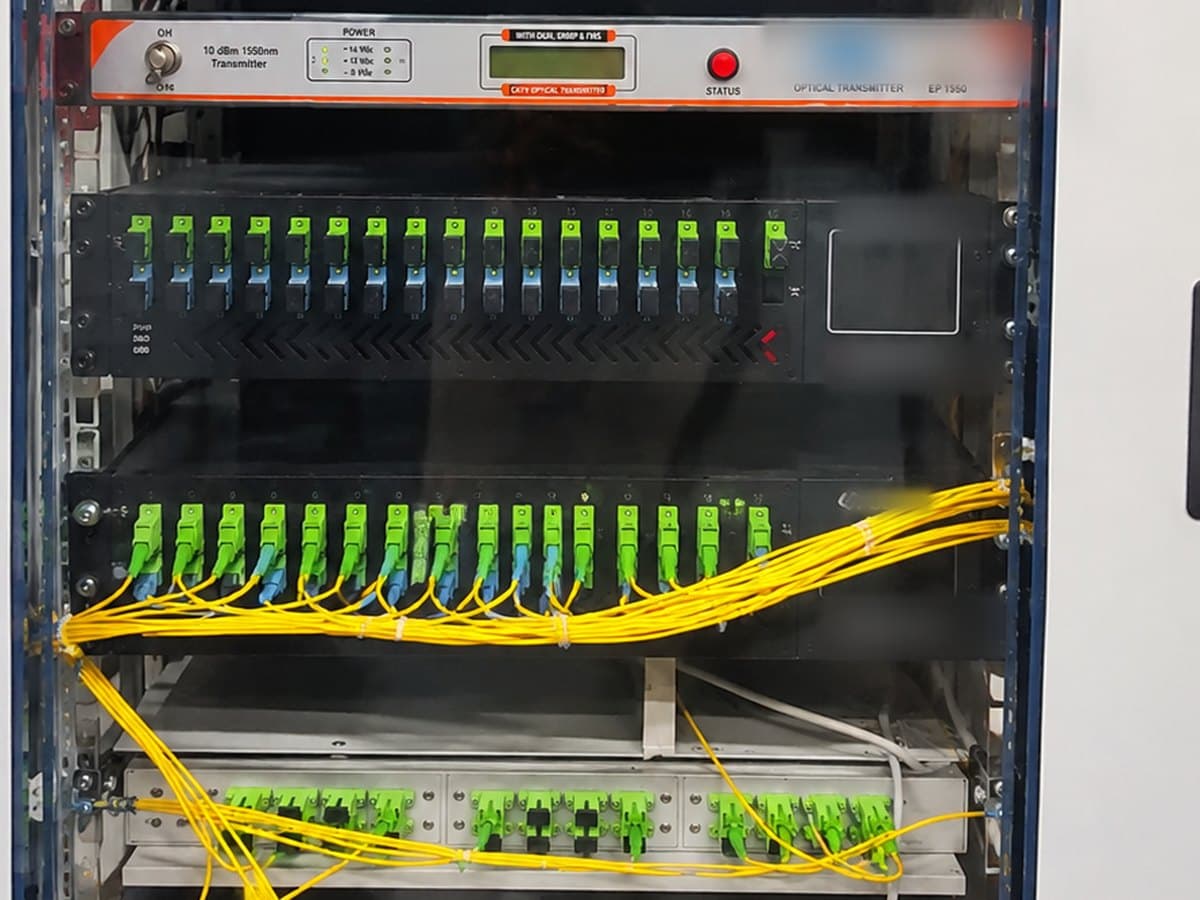
| Layer 3 switch, 24-port, HA mode | Carries all gantry traffic back to the plaza, with a standby unit ready to take over. |
| Additional components | Anything extra a site needs to hit the accuracy targets, such as thermal cameras. |
- The exact set for a site depends on the number of lanes and the site survey.
Servers, Load Balancing and Backup
The plaza is built so that no single failure stops tolling. Servers, storage and network links are duplicated, and the work is shared between them.
- High-availability servers: rack-mounted, industrial-grade servers with two processors of 12 cores or more, at least 64 GB of RAM, dual 10 GbE ports and a dual redundant power supply. They run in HA mode, so a standby takes over if the main server fails.
- Load balancing: incoming lane traffic is spread across the servers, so a busy hour does not slow transactions and a server can be taken out for maintenance without stopping tolling.
- Backup server: a separate backup server keeps a protected copy of the database, transactions and images, so records can be restored after a fault.
- Resilient storage: at least 125 TB usable, with RAID, two controllers working in active/active mode and protection against disk, fan and power-supply failure. Snapshots can be taken for backup.
- Retention you can rely on: images are kept for 180 days and video for 30 days. Records tied to a dispute are held until the end of the contract.
- Local first, cloud optional: servers sit at the plaza, and a redundant MeitY-empanelled cloud setup can be added for extra resilience.
- Flexible hosting: the servers support Hyper-V, VMware and Citrix virtualization.
At the Plaza and the Control Room
The gantry sends everything to the plaza, where redundant servers process it and operators watch it live.
| Equipment | What it does |
|---|---|
| MLFF local server, HA mode | Runs the MLFF system. Two 12-core or better processors, 64 GB RAM or more and 30 TB of local storage, with 7 days of data kept on the server. |
| Storage | 125 TB or more, usable after RAID. Holds all images and video for the retention period. |
| Workstations with 27-inch display | Operator desks for live monitoring, notices and reports. |
| Server rack, 27U | Houses the servers, storage and network gear. |
| Firewall with all licences | Guards the plaza network and the link to banks and NPCI. |
| Surge protector | Protects the plaza equipment from power surges. |
| Redundant internet, 1 Gbps leased lines | Two independent links, so one failure does not stop transactions. |
| PTZ cameras for plaza and gantry | Pan-tilt-zoom views of the plaza and the gantry. |
| 75-inch Full HD LED screen | Live status display at each fee plaza (not needed at the common control centre). |
| Video wall and controller | Multi-cube wall of 55-inch Full HD cubes at the common control centre, built for 24x7 operation. |
| Cabling and protection | Armoured optical fibre, electrical cable, Cat-6A with cable trays, earthing, lightning protection and network surge protection. |
The Software That Runs It
Hardware only collects signals. The software turns them into tolls, notices and reports. All licences are perpetual or open source.
| MLFF software with portal and dashboard | The core application: lane events, transactions, notices, dashboards and reports. |
|---|---|
| ANPR application | Reads the number plate and picks the best image for each vehicle. |
| Video management software | Records, stores and plays back the camera feeds. |
| Radar and LiDAR applications | Turn detector data into vehicle events, speed and class. |
| RFID reader and antenna application | Manages the readers and passes tag reads to the core system. |
| Video analytics | Adds intelligence to the camera feeds. |
| Enterprise management software (EMS) | Monitors network and servers, runs the helpdesk and tracks every SLA, with reports in PDF, Excel and CSV. |
| VAHAN integration | Fetches vehicle and owner details for notices. |
| MLFF TMCC integration | Connects the plaza to the central control layer. |
When a FASTag Can't Pay
With no barrier to stop them, some vehicles will pass without paying. MLFF handles them with an e-Notice instead of a stop. A notice is raised when:
- the FASTag is hotlisted or has low balance, or fails the balance check
- the FASTag is blacklisted or closed, or already carries an e-Notice flag
- the FASTag is not registered, or its bank code is not on the plaza's valid list
- the vehicle has no FASTag at all
What Happens Next: The e-Notice Flow
The notice is raised with evidence attached, and it is followed until it is closed.
- 1. The plaza system
- Evidence uploadedFront and back images go to the national e-Notice document store first
- Notice raisedA uniquely numbered e-Notice with the plaza, lane and time of the read
- Owner foundOwner details are fetched from VAHAN
The owner and the issuer bank are informed - 2. The owner and the bank
- Owner informed by SMSHow to pay, or how to raise a grievance
- Issuer bank alertedMay flag the FASTag until the notice is cleared
Until the notice is closed - 3. Closure
- Resolved or expiredThe notice is tracked until it is resolved or expires
- End-of-day reportsKeep every party reconciled
Fair to Genuine Users
Exempted vehicles and those with a local, monthly or annual pass are handled as non-financial transactions. They pass freely and are never wrongly charged or sent a notice.
Built for Highway Conditions
- Devices are specified for -10°C to +55°C, with IP65 to IP67 protection on the gantry equipment.
- Lightning arrester on the structure and surge protection at every junction box.
- Cameras keep a tamper-proof 24-hour recording on site, and the control centre holds 30 days of video.
- The LiDAR has its own processing unit, so detection carries on if the network drops.
- Redundant servers with load balancing, a backup server and two internet links keep the plaza running through a single failure.
- Every message to the bank and NPCI is digitally signed and sent over a secure connection.
Works Alongside Your Existing Lanes
A plaza can run in hybrid mode. Existing barrier lanes get the same RFID and ANPR kit, with vehicle classification from LiDAR or a camera-based counting and classification solution, while new MLFF lanes run on their own merchant ID. Plazas can move to free flow gradually.
Where It Fits
- National highways and expressways
- State highways and bridges
- City entry points and urban corridors
- Existing plazas moving from barriers to free flow
FAQs — Multi Lane Free Flow (MLFF)
What is Multi Lane Free Flow (MLFF) tolling?
MLFF is a barrier-free way of collecting tolls. Vehicles pass the toll point at normal highway speed while the toll is deducted automatically from their FASTag, so there are no booths, barriers or queues.
What hardware is installed on an MLFF gantry?
Each lane carries an RFID antenna and reader, a radar detector, a LiDAR detector as per the solution, ANPR cameras facing front and back, an IR illuminator, a field junction box with surge protection and an edge switch. Each direction adds an audit surveillance camera and a 24-port Layer 3 switch in HA mode.
Why does MLFF use both RFID and ANPR cameras?
The RFID reader reads the FASTag quickly and with certainty. The ANPR cameras read the number plate, which covers vehicles with no FASTag or an unreadable one and gives photographic evidence for any notice.
What do the radar and the LiDAR do?
They detect each vehicle, measure its speed and help classify it, so the system knows when to trigger the reader and cameras and which toll class applies. Radar tracks many objects over a long range, while LiDAR scans the vehicle from overhead.
What servers and storage does an MLFF plaza need?
The plaza runs rack-mounted servers in high-availability mode, with load balancing across them and a separate backup server. Storage is at least 125 TB usable with RAID and two controllers, and keeps images for 180 days and video for 30 days.
How does the toll data reach the bank?
The gantry devices send their reads over the switches to the plaza servers. The servers identify the vehicle, work out the toll and send a digitally signed payment request through the acquirer bank and NPCI NETC to the issuer bank, which debits the FASTag. The result returns the same way and is stored with the images.
What happens if the FASTag has low balance or the vehicle has no FASTag?
The system raises an e-Notice with front and back images of the vehicle. The owner is notified by SMS and can pay online or raise a grievance. The notice is tracked until it is resolved or expires.
Can MLFF run alongside our existing barrier lanes?
Yes. A plaza can run in hybrid mode, with MLFF lanes on their own merchant ID and normal lanes on the existing one, until you are ready to move fully to free flow.
What keeps the system running if the network or a server fails?
The servers run in high-availability mode with load balancing and a backup server, the plaza has two internet links, the Layer 3 switch has a standby unit, and the LiDAR has its own processing unit so it keeps detecting during a network drop.
Who is this solution for?
Toll operators, concessionaires, system integrators and authorities running national, state or city toll plazas that want to move to barrier-free collection.
Other solutions
- Toll Management
- ANPR Monitering
- Smart Parking Management
- Inventory Management
- RFID Software System
- Plaza Center & Database Server
- Number Plate Detection
- Face Attendance System
- RFID Gate Automation
- ANPR & Vehicle Identification
- AI Damage Detection
- Vehicle Speed Monitoring
- Dock Space Visualization
- Real-Time Container Search
- Quality Inspection & Label Reading
- Pallet Classification & Counting
- Inventory Stack Height Monitoring
- Workstation Occupancy
- OCR-Based Document Data Extraction
- Forklift Operator & Activity Monitoring
- Safety Compliance Monitoring (PPE)
- Fire & Smoke Detection
- Operator Presence & Perimeter Monitoring
- RFID Race Timing System
- RFID Kote Management System
Enquire about the Multi Lane Free Flow (MLFF)
Tell us your lane count, read range or volume and we’ll quote the right configuration.